I studied finance at university because I thought it would teach me how to invest my money. I graduated knowing very little about how to actually do it. Was I supposed to read financial statements? Follow the charts? Buy companies whose names I recognised?
I tried the last one. After a few disappointing purchases of “blue chip” shares, I went looking for books on how to invest instead. That’s how I stumbled on The Little Book of Common Sense Investing, and on John “Jack” Bogle. It was the first thing I’d read that made investing simple, and it led me to the other two.
Most books about money make it sound harder than it is. They promise an edge: a stock-picking system, a chart pattern, a way to time the market. These three do the opposite. Read together, they answer the only three questions most people need answered about investing:
- What should you do with your money?
- Why does it work, when most professionals can’t beat the market?
- How do you stick with it when it gets hard?
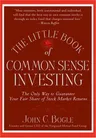
This is where I’d start. Bogle founded Vanguard and launched the first index fund for ordinary investors in 1976, an idea Wall Street mocked at the time. This short book is his whole philosophy in one sitting.
His advice fits in one sentence: “Don’t look for the needle in the haystack. Just buy the haystack!” Own the whole market through a low-cost index fund, and you’re guaranteed the market’s return, less a tiny fee.
The part that sticks is his maths on costs. Fees look small as percentages, but they compound against you just as returns compound for you. Over a working lifetime, a fund charging 1.5% a year can quietly take a large share of your final balance compared with one charging 0.1%. Investors as a group earn the market’s return minus their costs, so the only reliable way to come out ahead is to pay less.
Who it’s for: everyone. It’s short enough to read in a weekend.
The takeaway: buy the whole market, keep costs as low as you can, and hold for a long time.
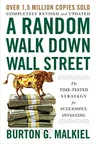
Bogle tells you what to do. Malkiel explains why it works. He’s a Princeton economist, and this is the book that made the case for index investing to a general audience. Its argument is simple: share prices already reflect what’s publicly known, and new information arrives at random, so price movements are close to unpredictable. That’s the “random walk”.
If prices are unpredictable, then picking winners is mostly luck, and paying someone to do it for you is mostly cost. Malkiel’s famous line is that a blindfolded monkey throwing darts at the stock pages could pick a portfolio that does about as well as the experts.
The book has been updated many times over fifty years, and the evidence has only grown. Year after year, most professionally managed funds trail the index they’re measured against, and the longer the period, the bigger that majority gets.
Who it’s for: anyone who still suspects there’s a trick to beating the market. It’s the longest of the three, but it’s the one that changes your mind.
The takeaway: stop trying to outsmart the market. It’s a game most professionals lose.
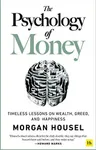
The first two books tell you what to do. This one explains why so few people manage to do it. Housel’s point is that doing well with money depends less on how smart you are than on how you behave, and behaviour is hard to teach in a spreadsheet.
It’s a collection of short chapters, each built around a story, and it’s the most enjoyable of the three to read. A few ideas stay with you:
- Compounding needs time more than talent. Most of the best long-term results come from simply staying invested for decades, not from spectacular returns.
- Enough is a real number. Without a sense of what’s enough, there’s always a reason to take one more risk.
- Room for error matters more than precision. Savings and a margin of safety let you survive the bad years, and surviving is what lets compounding work.
- Volatility is the price of admission. Markets fall sometimes. Treating that as a fee rather than a fine makes it much easier to sit still.
Who it’s for: anyone who knows what they should do with money and still finds it hard to do.
The takeaway: the plan only works if you can live with it. Build one you won’t abandon in a bad year.
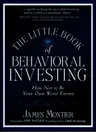
If The Psychology of Money convinces you that behaviour is the hard part, Montier’s book shows you exactly how your brain gets in the way. It sits in the same “Little Book” series as Bogle’s, and it’s a tour of the mental shortcuts that cost investors money:
- Overconfidence. Most of us think we’re above-average investors, which is how people end up trading too much.
- Loss aversion. Losses hurt about twice as much as equal gains feel good, so we hold losers too long and sell winners too early.
- Herding. Buying what everyone else is buying feels safe, which is why it’s usually expensive by the time you do.
- Hindsight. Once something has happened, it looks obvious, and we convince ourselves we can predict the next one.
Montier’s fix is mostly about process: decide your rules in advance, while you’re calm, and follow them when you’re not.
Who it’s for: anyone who has read the other three and wants to understand why sticking to a simple plan is still so hard.
The takeaway: you can’t switch off your biases, but you can set up rules that stop them making the decisions.
Putting it together
Read together, the three books give you a complete plan, and it’s a surprisingly short one:
- Accept that you won’t beat the market. Neither will most of the people charging to try.
- Own the market cheaply. Broad, low-cost index funds, with fees as close to zero as you can find.
- Leave it alone. Keep adding, ignore the headlines, and let time do the work.
None of this is specific to the US, even though all three authors are American. In Australia the same ideas apply to low-cost index funds on the ASX, and to the investment option you choose inside your super, where fees compound for even longer.
If you only read one, read Bogle. If you read all three, you’ll know more about investing than most people who talk about it for a living.
The boring part
There’s one thing none of these books spend much time on: tax. Buy-and-hold investing means decades of parcels bought at different prices, distributions that adjust your cost base, and capital gains to work out whenever you sell. That’s the problem I built Costbase to solve.
This article is general information about books and investing ideas, not financial advice. Consider your own circumstances, or speak to a licensed professional, before making investment decisions.